The Unnamed Women
Posted on 09/04/2026
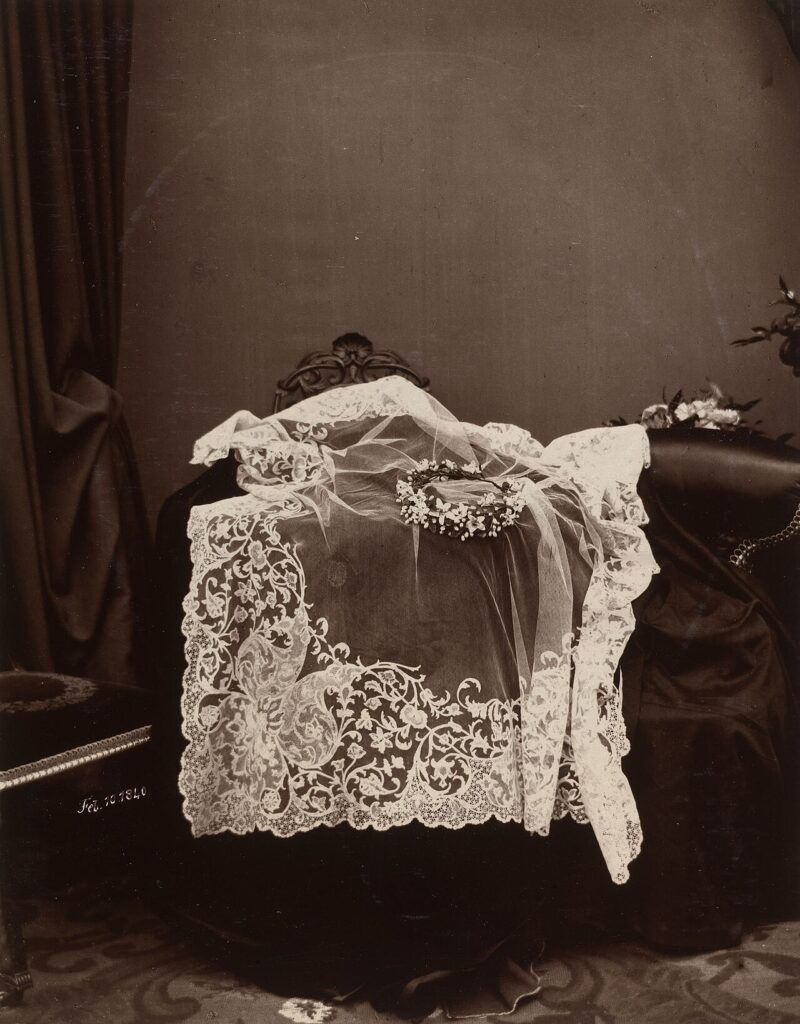
Image is of Queen Victoria’s wedding veil.
My latest book The Lacemaker’s Secret which is due out later this year, is about a family of lacemakers in the mid-nineteenth century – three sisters who labour under the service of their demanding father. My book is set in Devon, in a fictional place, inspired by several existing villages, and reflects the reality of the lacemakers who lived and worked there at the time. The centre of lacemaking was in Honiton, but there were lacemakers throughout the region and beyond.
Making lace by hand was a laborious and largely thankless business. It took hours and hours to make even the tiniest portion, or sprig, which is what such pieces were called. It was mostly made by women, often as a supplement to the household income and was a vital contribution, particularly in the winter months when it was harder to make money in other ways. Such women often worked in chilly cottages with nothing to warm them other than a bowl of coals which they placed under their skirts, and in dim light. Candles were expensive, and many resorted to working outdoors. They worked while they looked after children and between making the meals that were prepared in the same room in which the snowy sprigs were made. The type of lace that features in the book is called bobbin lace and was made on a straw-stuffed pillow onto which the patterns were pinned. Women suffered from lung problems and poor eyesight because of the hours spent bent over their laps. Their work was rewarded very poorly, often with tokens rather than real money, which were exchanged for goods in the local shops.
Queen Victoria, in a bid to support local businesses, commissioned lacemakers in the villages of Honiton and Beer, to make her wedding veil. The work was supervised by Jane Bidney, but there is no record of the names of the hundreds of women who made the sprigs for her veil which was four yards long and decorated with a design of orange blossom. She married Prince Albert in the winter of 1840 in sprigs and flounces made by women who had incredible skill but who received no recognition for their work. Not a single name is recorded anywhere, even though Queen Victoria loved her wedding veil so much that she was buried with it draped over her face. Lace making of this very labour intensive kind stopped being made in such a widespread way when looms were able to churn the stuff out much faster and for a fraction of the cost.
The Lacemaker’s Secret features a wedding veil, perhaps not quite as sumptuous as the one Queen Victoria wore, but it nevertheless provides a focus for my story. It is created amidst a harsh, frozen winter, by three young women stricken by grief and beset by unanswered questions. In the making of it secrets are exposed and the guilty are eventually brought to justice. We all know that there is something distinctly spooky about veils. The one in my book is no exception.